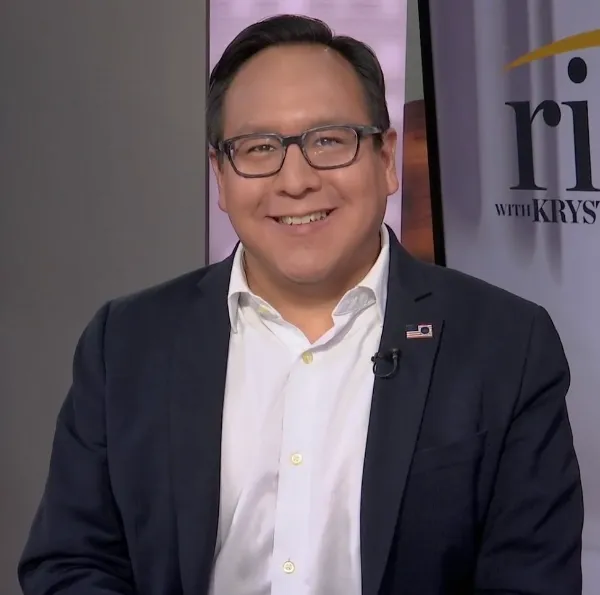
Advisor

Nate Snyder

Snyder was last appointed and served in the Biden Administration as the Chief of Staff of the Office of Partnership & Engagement at U.S. Department of Homeland Security. Prior to that, he served as a Senior Policy Advisor to the DHS Counterterrorism Coordinator and Senior Advisor to the Deputy Secretary, focusing on partnerships with law enforcement, the tech industry, community organizations, and the faith-based community. He oversaw the reorganization and workforce transformation of the Secretary’s Office of Partnership and Engagement, helped establish the first DHS Tribal Advisory Council, and re-established the Department’s Faith-based Advisory Council. He played a key role in reinvigorating the Department’s counterterrorism efforts and contributed to the National Strategy for Countering Domestic Terrorism, National Strategy to Counter Antisemitism, National Strategy to Counter Islamophobia, and The DHS Roadmap for Responsible Use of Artificial Intelligence. One of his proudest achievements during the Biden Administration was his contribution to Operation Allies Welcome–the evacuation of approximately 100,000 Afghan Allies to the United States. During this effort, Snyder developed a strategy, recruited and led a nation-wide interagency team of external affairs officers. This effort ensured that the needs of Afghan evacuees were met through effective communication, coordination, and the mobilization of local resources via public-private partnerships. For his leadership, he was awarded the Secretary’s Meritorious Silver Medal. In addition to these duties, he served as a subject matter expert and advised the Department and White House National Security Council on border security, artificial intelligence, human trafficking, public-private partnerships, terrorism prevention, election security, disinformation, foreign malign influence, transnational repression, social engineering, infrastructure protection, and threat mitigation. Snyder’s leadership extends to academia. He is an Adjunct Professor at the University of Chicago, where he teaches a graduate course in threat risk management. He helped redesign the program to include elements on cybersecurity, election security, international relations, environmental security, and national security. Prior to rejoining government during the Biden Administration, Snyder was an Executive Vice President with Cambridge Global Advisors, LLC, a national security consulting and strategic communications firm. In that role, he advised and supported Fortune 500, federal, and state and local clients on cybersecurity, counterterrorism, information and intelligence sharing, and law enforcement engagement. He supported the Voting Village’s election security exploits at DEFCON 2019, assessing vulnerabilities in current-use voting machines. He also supported the U.S. Department of Homeland Security’s National Cybersecurity and Communications Integration Center. Snyder provided guidance to clients on engaging with domestic and international law enforcement regarding terrorist use of the internet, cyber threats, terrorism prevention, countering foreign influence, and intelligence analysis. He has provided counterterrorism analysis on CBS This Morning, Meet the Press Daily, MSNBC Live, and CNN Tonight. He has also contributed analysis on the 5G network race and national security vulnerabilities posed by Huawei with Hill TV. He is also a contributor to other media outlets such as C-SPAN, New York Times, Los Angeles Times, Wall Street Journal, Reuters, Vanity Fair, Daily Beast, Huffington Post, The Hill, and Yahoo News on national security, cybersecurity, counterterrorism, and law enforcement. During the Obama Administration, Snyder was appointed and served as a Department of Homeland Security (DHS) counterterrorism official and advisor to the Department of Justice, Federal Bureau of Investigation, National Counterterrorism Center, and White House National Security Council. His role focused on developing partnerships with domestic and international law enforcement, state and local officials, the tech sector, foundations, non-government organizations, and communities to prevent terrorism. He contributed to the Obama Administration’s efforts to counter the Islamic State of Iraq and the Levant. Snyder was a key contributor to the White House’s first Strategic Implementation Plan to Empower Local Partners to Prevent Violent Extremism in the United States and its 2016 update. He led the interagency effort to develop and host the Global Counterterrorism Forum’s workshop for Countering Violent Extremism Through Community Oriented Policing. He specialized in terrorist use of the internet and worked with Five Eyes (United Kingdom, Canada, New Zealand, Australia) and European Union partners on information sharing standards regarding terrorist-based cyber threats. Snyder was a regular counterterrorism lecturer at the CIA Sherman Kent School for Intelligence Analysis and has lectured at the White House, National Counterterrorism Center, National Security Agency, U.S. Department of State, Federal Bureau of Investigation, U.S. Institute of Peace, and the International Association of Chiefs of Police. Before joining the Obama Administration in 2009, he held senior positions with the 2008 Obama Presidential Campaign. Most recently, Snyder was a candidate to be the next Chair of the Democratic National Committee. While placing fourth in a crowded field, his campaign was successful in changing the narrative where challenges regarding cybersecurity, disinformation, election security, foreign interference, and adopting national security solutions to such problems, were brought to the forefront. He is a graduate of the White House National Security Leadership Workshop’s inaugural class and a board member of the Obama Latino Appointee Alumni Association: LATINOS44. In 2019, he was recognized as a New America Latino leader in national security. He is a graduate of Syracuse University and holds a Master’s Degree from the U.S. Naval War College in national security and counterterrorism.

Leadership

Director

James Miller

Director

Makio Koga

Chair

Terutaka Kawabata

Advisory Committee

Founding Advisors

Technical Advisory Committee

Login

Please log in below.

Privacy Policy

The Japan Institute for CyberSpace Studies (hereinafter referred to as "JICSS") has established the following privacy policy (hereinafter referred to as "the Policy") regarding the handling of personal information of users in the services provided on this website (hereinafter referred to as "the Services").

Article 1 (Personal Information)
“Personal information” refers to "personal information" as defined in the Act on the Protection of Personal Information, and includes information about living individuals that can be used to identify specific individuals by name, date of birth, address, telephone number, contact information, and other descriptions, as well as data related to appearance, fingerprints, voiceprints, and health insurance card insurer numbers.

Article 2 (Method of Collecting Personal Information)
When you submit an inquiry form, JICSS will obtain your name and e-mail address.

Article 3 (Purpose of Collection and Use of Personal Information)
The purposes for which JICSS collect and use personal information are as follows

To provide and operate our services
To respond to inquiries from users (including identification)
To send e-mail notifications of new features, updates, campaigns, etc. of the service the user is using, as well as information on other services provided by the Company.
To contact you as necessary for maintenance, important notices, etc.
To identify users who violate the Terms of Use or who attempt to use the service for illegal or unjust purposes, and to refuse their use of the service.
To allow users to view, change, or delete their own registration information, or to view the status of their use of the service.
To bill users for paid services.
For purposes incidental to the above purposes of use

Article 4 (Change of Purpose of Use)
JICSS shall change the purpose of use of personal information only when it is reasonably recognized that the purpose of use is related to the purpose of use before the change.
In the event of a change, JICSS shall notify the User of the changed purpose or publicly announce it on this website in a manner prescribed by JICSS.

Article 5 (Provision of Personal Information to Third Parties)
Except in the following cases, JICSS will not provide personal information to a third party without the prior consent of the user. However, this excludes cases permitted under the Personal Information Protection Law and other laws and regulations.
When it is necessary for the protection of the life, body, or property of an individual and it is difficult to obtain the consent of the individual.
When the provision of personal information is especially necessary for improving public health or promoting the sound growth of children, and it is difficult to obtain the consent of the individual concerned.
When it is necessary to cooperate with a national agency, a local government, or an individual or entity entrusted by either a national agency or local government to execute affairs prescribed by law, and obtaining the consent of the individual is likely to impede the execution of such affairs.
When we have notified or announced the following matters in advance, and when we have notified the Personal Information Protection Committee
The purpose of use includes provision to a third party
Data items to be provided to the third party
Means or method of provision to third parties
Cessation of provision of personal information to third parties at the request of the individual
The method of accepting the request of the person in question
Notwithstanding the provisions of the preceding paragraph, in the following cases, the party to which the relevant information is provided shall not fall under the category of a third party.
(i) When we outsource all or part of the handling of personal information within the scope necessary for the achievement of the purpose of use
When personal information is provided as a result of the succession of business due to a merger or other reasons
When personal information is used jointly with a specific person, and the Company notifies the person in advance or makes the information readily accessible to the person in advance to that effect, the items of personal information jointly used, the scope of joint use, the purpose of use by the person using the information, and the name of the person responsible for managing the personal information Article 6 (Disclosure of Personal Information)

Article 6 (Disclosure of Personal Information)
When requested to disclose personal information by the person in question, JICSS will disclose such information to the person without delay. However, if JICSS decides not to disclose the personal information, it will notify the individual to that effect without delay. A fee of 1,000 yen will be charged for each case of disclosure of personal information.
When there is a risk of harm to the life, body, property, or other rights or interests of the person concerned or a third party
If there is a risk of significant hindrance to the proper conduct of our business
If it violates any other laws or regulations.
Notwithstanding the preceding paragraph, in principle, JICSS will not disclose information other than personal information, such as historical information and characteristic information.

Article 7 (Correction and Deletion of Personal Information)
If the User's personal information held by JICSS is incorrect, the User may request JICSS to correct, add, or delete (hereinafter referred to as "correct, etc.") his/her personal information in accordance with procedures determined by JICSS.
If we deem it necessary to respond to the request from the user as described in the preceding paragraph, we will make the correction, etc. to the relevant personal information without delay.
In the event that JICSS makes corrections, etc. based on the preceding paragraph, or decides not to make such corrections, etc., JICSS will notify the User of such decision without delay.

Article 8 (Suspension of Use of Personal Information)
When we receive a request from a user to stop using or delete (hereinafter referred to as "stop using, etc.") his/her personal information on the grounds that it has been handled beyond the scope of the purpose of use or that it has been obtained by wrongful means, we will conduct the necessary investigation without delay.
If, based on the results of the investigation described in the preceding paragraph, we determine that it is necessary to comply with the request, we will suspend the use of the relevant personal information without delay.
When JICSS suspends the use of personal information in accordance with the preceding paragraph or decides not to suspend the use of personal information, JICSS will notify the user of this decision without delay.
Notwithstanding the preceding two paragraphs, in cases where the suspension of use involves a large amount of cost or it is otherwise difficult to suspend the use of personal information, and alternative measures can be taken to protect the rights and interests of the user, these alternative measures shall be taken.

Article 9 (Changes to Privacy Policy)
The contents of this Privacy Policy may be changed without notice to the User, except as otherwise provided by law or other regulations.
Unless otherwise specified by the Company, the revised Privacy Policy shall take effect from the time it is posted on the Website.

Article 10 (Contact for Inquiries)
Inquiries regarding this policy should be directed to the following contact

Commercial Disclosure

Legal Name The Japan Institute for CyberSpace Studies (JICSS), also registered as 一般社団法人 サイバー空間総合研究所.

Representative Our operations are led by our Director, Terutaka Kawabata.

Address Our headquarters are located at the Ginza Main Office: 4F Ginza KR II Bldg, 2-15-2 Ginza, Chuo-ku, Tokyo 104-0061, Japan.

Contact Information For inquiries, please contact us via email at info@jicss.org or by phone at +81 3 6281 5152. Our telephone support is generally available during standard business hours (10:00–17:00 JST), excluding weekends and public holidays.

Pricing and Additional Fees Service prices and membership dues are clearly displayed on the respective registration or checkout pages. There are no additional hidden fees for digital services; however, any bank transfer fees or internet connection costs remain the responsibility of the customer.

Payment Methods and Timing We accept payments via Credit Card (processed through Stripe) and Bank Transfer. Credit card payments are processed immediately at the time of purchase. For bank transfers, payment is required within 7 days of the order.

Delivery of Services Digital memberships and access to research materials are provisioned immediately upon successful completion of the payment process.

Cancellations and Refunds Due to the nature of digital content and immediate access to membership benefits, we generally do not offer refunds once a transaction is completed. You may cancel your membership at any time to prevent future billing through your account settings, but previous payments are non-refundable.