

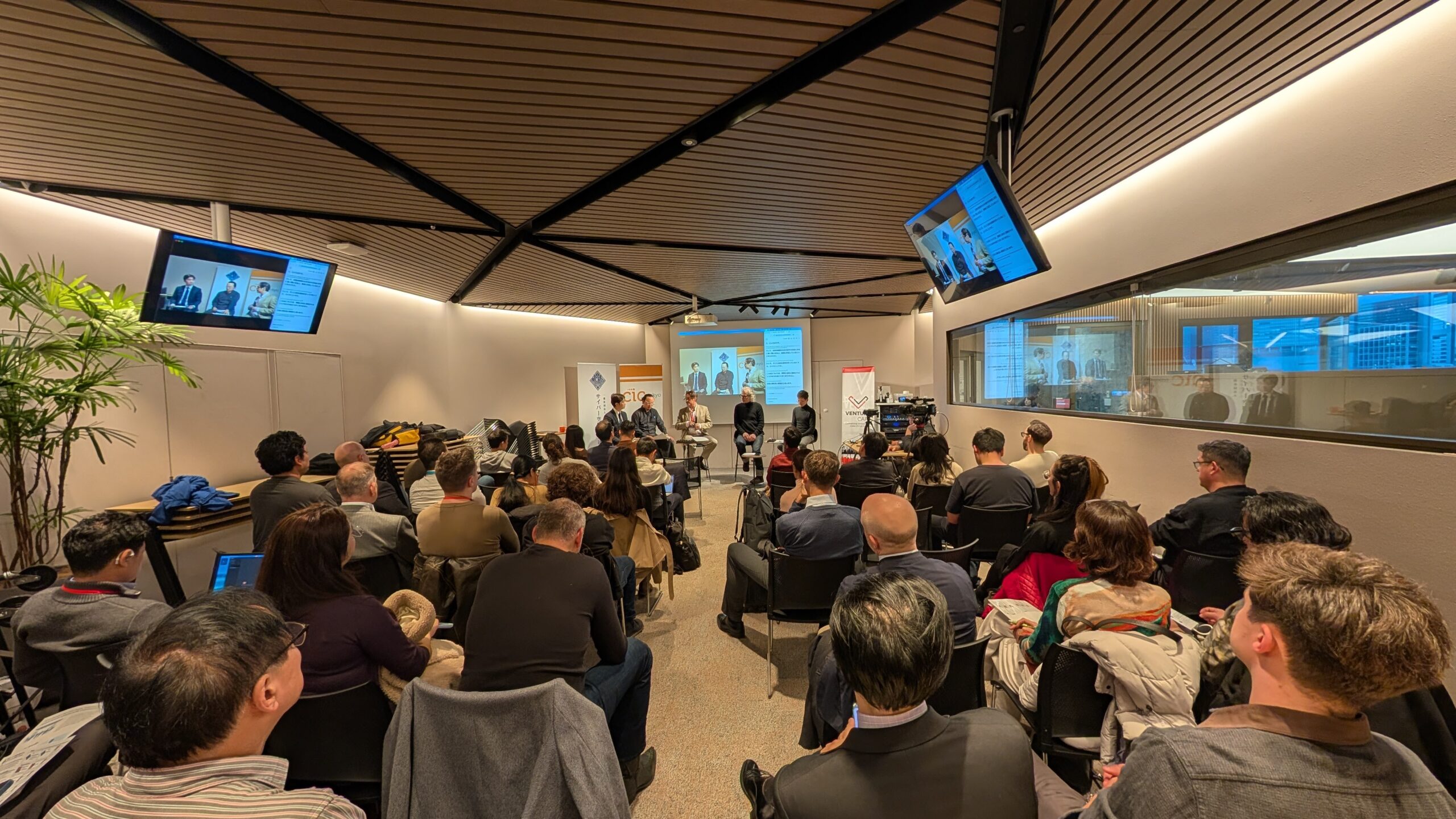
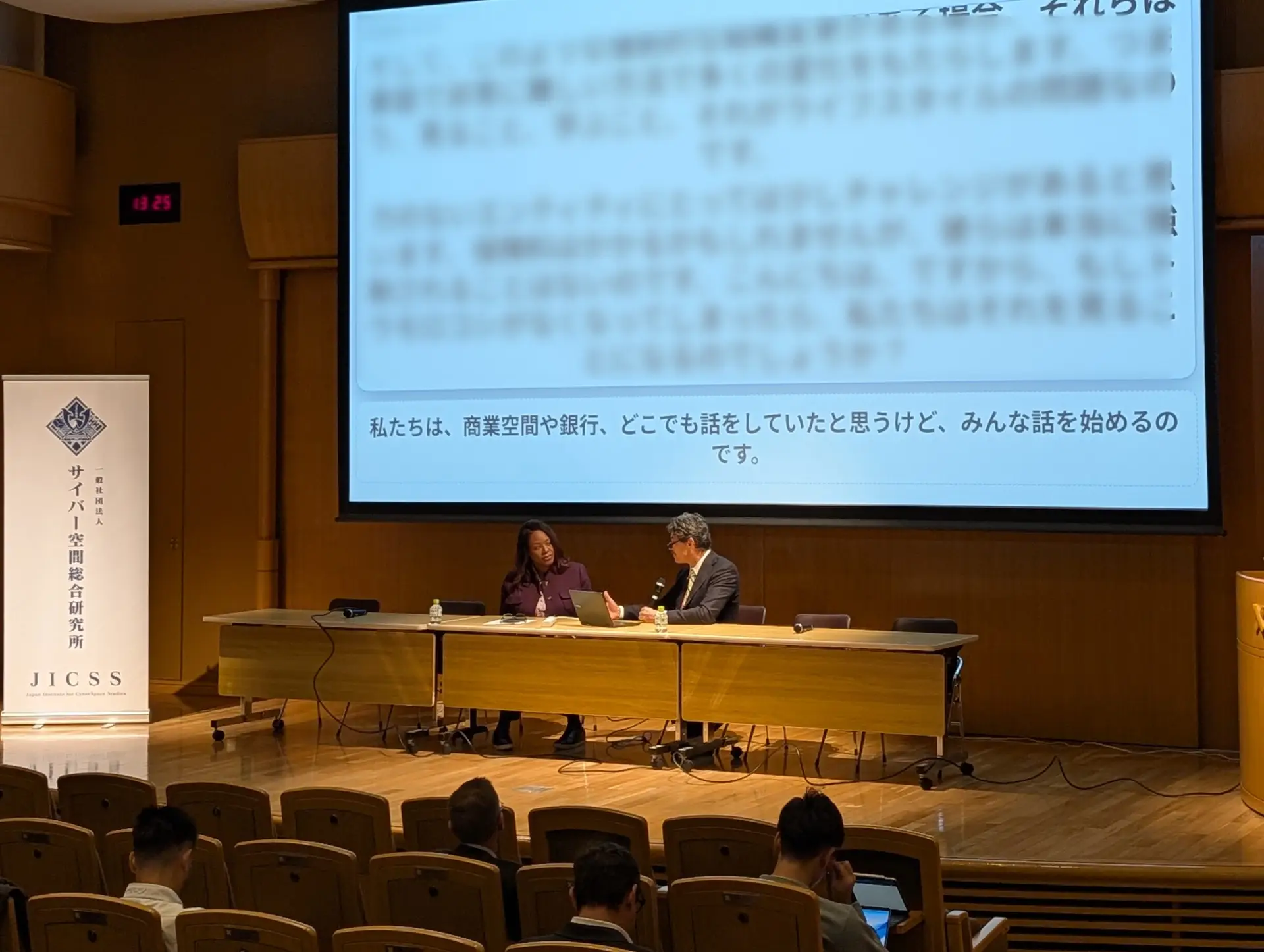
Seminar by Mr. Furchtgott”A Guide for 2025 and Beyond: America’s View on Asia”

Organizer: JICSS
Main Speaker: Jeremy Furchtgott (Director, BARON) 
Moderator: James Miller
Date: March 3, 2025 
Venue: Aoyama Spiral Room, Minato-ku, Tokyo 

1. Overview 

Held under the Chatham House Rule, the seminar explored major policy realignments within the United States concerning security, economic strategy, and alliances, along with the broader domestic transformations underpinning them. 

Two key contextual assumptions were emphasized at the outset: 

1) Contrary to popular perception, the U.S. government and institutions remain functionally coherent and guided by rational processes. 

2) A sweeping political transformation is underway in Washington D.C., particularly on the right, with core post-WWII policy doctrines undergoing fundamental reassessment. 

2. Paradigm Shift in American Political Affairs 

Revisiting Post-War Doctrines
Since the end of World War II, U.S. political and economic philosophy has centered on international engagement, emphasizing strategic alliances, trade liberalization, dismantling protectionist barriers, and a firm commitment to democratic governance. However, over the past two decades, this outward-oriented approach has coincided with visible domestic stagnation—marked by declining living standards, reduced life expectancy, erosion of family structures, and diminishing personal wealth. 

Redefining Commitments to Allies
In this context, the U.S. has begun to recalibrate its global responsibilities, demanding greater self-reliance from its allies and reassessing commitments based on strategic necessity. For example, in handling the Ukraine war, there appears to be a pivot toward resolution and redeployment of strategic focus to Asia. President Trump is currently

concentrated on European affairs, yet is reportedly preparing to shift attention to Asia, though the timeline remains unclear. 

3. Implications for Allies 

Expectations Toward Japan 
According to American officials, a significant policy request may soon be made to Japan, possibly within the next few months, regarding defense capabilities and supply chain resilience. The U.S. increasingly views defense budget allocations as a reflection of national intent, and Japan’s recent increases are positively noted. In contrast, Taiwan’s relatively modest spending invites skepticism. 

Furthermore, moves such as constitutional reforms on offensive capabilities—or even, at the extreme, discussions around nuclear policy—would be welcomed by allies as signals of greater autonomy and shared responsibility. 

Japan’s Regional Role 
As the U.S. calls for more independent defense initiatives, other Asian countries are likely to look to Japan for leadership within the regional security framework. Strengthening Japan’s cybersecurity posture is considered vital, particularly for protecting critical infrastructure and meeting pressing national security demands. 

4. U.S. Perspectives on Japan 

Japan’s advanced technology and high-quality industrial output are highly valued by American policymakers and business leaders. Particular attention is being paid to opportunities in the financial and capital markets. Japan’s enduring commitment to “quality-first” philosophy, largely lost in the U.S. since the 1980s, continues to distinguish its industrial culture. 

Accordingly, there is increasing momentum in Washington to promote Japan as a reliable partner to replace China to revise global supply chains. That said, political friction remains—highlighted by the controversy surrounding the Nippon Steel–U.S. Steel M&A deal, where cultural and symbolic factors appeared to outweigh economic rationale. 

5. Domestic Challenges in the United States 

Rise of Influencers over Experts 
The 2024 presidential campaign revealed a marked preference for influencers over credentialed experts. Twenty-five prominent figures—including Charlie Kirk, Jack Posobiec, Raheem Kassam, and others—exerted more influence than traditional economists or trade scholars. This reflects a broader social trend toward populist communication. 

Educational and Cultural Concerns
A recent X (formerly Twitter) post from a Musk associate criticized American labor culture, citing a lack of diligence and appreciation for quality. Comparisons with students in Malaysia, France, and Japan reinforced concerns about U.S. competitiveness. Advocates argue for structural reforms in education and career pathways, while cultural differences between Japan’s precision-driven mindset and America’s speed-oriented culture continue to prompt debate. 

6. Structural Shifts in Global Industry 

Blurred Corporate Nationalities
The distinction between domestic and foreign firms has grown increasingly opaque. As illustrated by the Volvo case, companies acquired by Chinese entities often retain their “foreign” identity, complicating assessments of control. This presents major challenges for allies, including Japan, in building secure and resilient supply chains independent of China. 

“Democratization of Technology”
In the UK and elsewhere, declining tech costs and enhanced consumer value—dubbed the “democratization of technology”—are stimulating economic growth. This highlights the broader principle that opportunity often lies beyond risk, a lesson applicable to Japan and its allies. 

7. Q&A Highlights 

Taiwan Policy
While the U.S. remains a principal arms supplier to Taiwan, resource constraints—due to Ukraine and Israel—may reduce future sales. The logic underpinning support for Israel may, however, inform future U.S.-Taiwan relations. 

India’s Position
As a member of the QUAD, India remains part of U.S.-Japan cooperation frameworks. However, its inconsistent motivation and dual ties with both Russia and the U.S. make it an unpredictable partner. 

8. Closing 

The session concluded with remarks from the moderator. Attendees continued discussions informally during a networking reception that followed.
Share the Post:

Related Posts

Login

Please log in below.

Privacy Policy

The Japan Institute for CyberSpace Studies (hereinafter referred to as "JICSS") has established the following privacy policy (hereinafter referred to as "the Policy") regarding the handling of personal information of users in the services provided on this website (hereinafter referred to as "the Services").

Article 1 (Personal Information)
“Personal information” refers to "personal information" as defined in the Act on the Protection of Personal Information, and includes information about living individuals that can be used to identify specific individuals by name, date of birth, address, telephone number, contact information, and other descriptions, as well as data related to appearance, fingerprints, voiceprints, and health insurance card insurer numbers.

Article 2 (Method of Collecting Personal Information)
When you submit an inquiry form, JICSS will obtain your name and e-mail address.

Article 3 (Purpose of Collection and Use of Personal Information)
The purposes for which JICSS collect and use personal information are as follows

To provide and operate our services
To respond to inquiries from users (including identification)
To send e-mail notifications of new features, updates, campaigns, etc. of the service the user is using, as well as information on other services provided by the Company.
To contact you as necessary for maintenance, important notices, etc.
To identify users who violate the Terms of Use or who attempt to use the service for illegal or unjust purposes, and to refuse their use of the service.
To allow users to view, change, or delete their own registration information, or to view the status of their use of the service.
To bill users for paid services.
For purposes incidental to the above purposes of use

Article 4 (Change of Purpose of Use)
JICSS shall change the purpose of use of personal information only when it is reasonably recognized that the purpose of use is related to the purpose of use before the change.
In the event of a change, JICSS shall notify the User of the changed purpose or publicly announce it on this website in a manner prescribed by JICSS.

Article 5 (Provision of Personal Information to Third Parties)
Except in the following cases, JICSS will not provide personal information to a third party without the prior consent of the user. However, this excludes cases permitted under the Personal Information Protection Law and other laws and regulations.
When it is necessary for the protection of the life, body, or property of an individual and it is difficult to obtain the consent of the individual.
When the provision of personal information is especially necessary for improving public health or promoting the sound growth of children, and it is difficult to obtain the consent of the individual concerned.
When it is necessary to cooperate with a national agency, a local government, or an individual or entity entrusted by either a national agency or local government to execute affairs prescribed by law, and obtaining the consent of the individual is likely to impede the execution of such affairs.
When we have notified or announced the following matters in advance, and when we have notified the Personal Information Protection Committee
The purpose of use includes provision to a third party
Data items to be provided to the third party
Means or method of provision to third parties
Cessation of provision of personal information to third parties at the request of the individual
The method of accepting the request of the person in question
Notwithstanding the provisions of the preceding paragraph, in the following cases, the party to which the relevant information is provided shall not fall under the category of a third party.
(i) When we outsource all or part of the handling of personal information within the scope necessary for the achievement of the purpose of use
When personal information is provided as a result of the succession of business due to a merger or other reasons
When personal information is used jointly with a specific person, and the Company notifies the person in advance or makes the information readily accessible to the person in advance to that effect, the items of personal information jointly used, the scope of joint use, the purpose of use by the person using the information, and the name of the person responsible for managing the personal information Article 6 (Disclosure of Personal Information)

Article 6 (Disclosure of Personal Information)
When requested to disclose personal information by the person in question, JICSS will disclose such information to the person without delay. However, if JICSS decides not to disclose the personal information, it will notify the individual to that effect without delay. A fee of 1,000 yen will be charged for each case of disclosure of personal information.
When there is a risk of harm to the life, body, property, or other rights or interests of the person concerned or a third party
If there is a risk of significant hindrance to the proper conduct of our business
If it violates any other laws or regulations.
Notwithstanding the preceding paragraph, in principle, JICSS will not disclose information other than personal information, such as historical information and characteristic information.

Article 7 (Correction and Deletion of Personal Information)
If the User's personal information held by JICSS is incorrect, the User may request JICSS to correct, add, or delete (hereinafter referred to as "correct, etc.") his/her personal information in accordance with procedures determined by JICSS.
If we deem it necessary to respond to the request from the user as described in the preceding paragraph, we will make the correction, etc. to the relevant personal information without delay.
In the event that JICSS makes corrections, etc. based on the preceding paragraph, or decides not to make such corrections, etc., JICSS will notify the User of such decision without delay.

Article 8 (Suspension of Use of Personal Information)
When we receive a request from a user to stop using or delete (hereinafter referred to as "stop using, etc.") his/her personal information on the grounds that it has been handled beyond the scope of the purpose of use or that it has been obtained by wrongful means, we will conduct the necessary investigation without delay.
If, based on the results of the investigation described in the preceding paragraph, we determine that it is necessary to comply with the request, we will suspend the use of the relevant personal information without delay.
When JICSS suspends the use of personal information in accordance with the preceding paragraph or decides not to suspend the use of personal information, JICSS will notify the user of this decision without delay.
Notwithstanding the preceding two paragraphs, in cases where the suspension of use involves a large amount of cost or it is otherwise difficult to suspend the use of personal information, and alternative measures can be taken to protect the rights and interests of the user, these alternative measures shall be taken.

Article 9 (Changes to Privacy Policy)
The contents of this Privacy Policy may be changed without notice to the User, except as otherwise provided by law or other regulations.
Unless otherwise specified by the Company, the revised Privacy Policy shall take effect from the time it is posted on the Website.

Article 10 (Contact for Inquiries)
Inquiries regarding this policy should be directed to the following contact


E-mail: info@jicss.org

Commercial Disclosure

Legal Name The Japan Institute for CyberSpace Studies (JICSS), also registered as 一般社団法人 サイバー空間総合研究所.

Representative Our operations are led by our Director, Terutaka Kawabata.

Address Our headquarters are located at the Ginza Main Office: 4F Ginza KR II Bldg, 2-15-2 Ginza, Chuo-ku, Tokyo 104-0061, Japan.

Contact Information For inquiries, please contact us via email at info@jicss.org or by phone at +81 3 6281 5152. Our telephone support is generally available during standard business hours (10:00–17:00 JST), excluding weekends and public holidays.

Pricing and Additional Fees Service prices and membership dues are clearly displayed on the respective registration or checkout pages. There are no additional hidden fees for digital services; however, any bank transfer fees or internet connection costs remain the responsibility of the customer.

Payment Methods and Timing We accept payments via Credit Card (processed through Stripe) and Bank Transfer. Credit card payments are processed immediately at the time of purchase. For bank transfers, payment is required within 7 days of the order.

Delivery of Services Digital memberships and access to research materials are provisioned immediately upon successful completion of the payment process.

Cancellations and Refunds Due to the nature of digital content and immediate access to membership benefits, we generally do not offer refunds once a transaction is completed. You may cancel your membership at any time to prevent future billing through your account settings, but previous payments are non-refundable.