Organizer: Keio University CCRC, MITRE Corporation
Venue: Mita, Tokyo
1. Overview
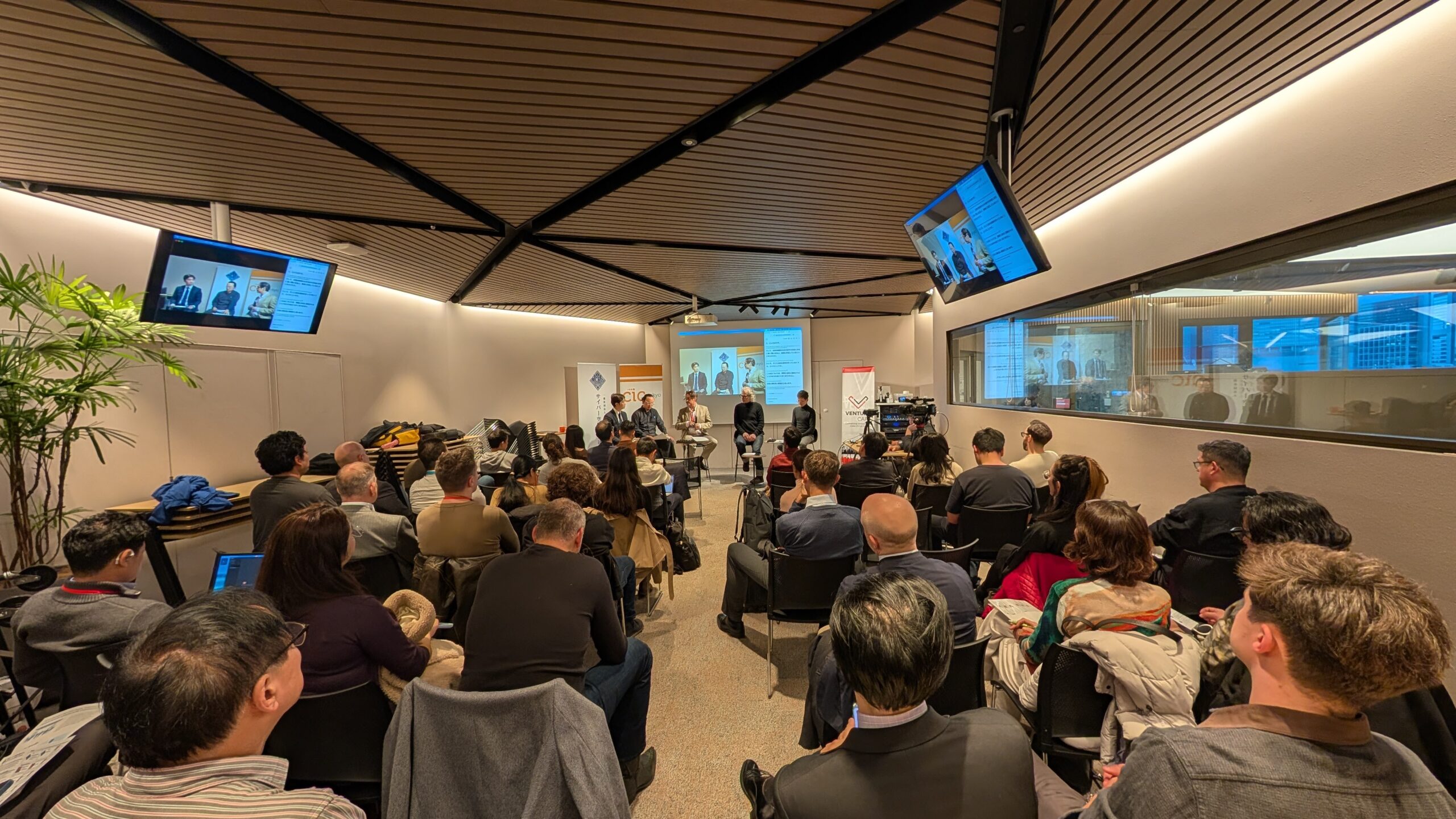
The Japan Institute for Cyberspace Studies (JICSS) was honoured to participate as a key thought leader at the 2025 Keio University/MITRE International Cybersecurity Symposium. Over four days, JICSS representatives engaged with government officials, private sector leaders, academics, and defence experts across multiple high-impact events.
2. Event Highlights
JICSS participated in six major symposium activities, including:
- Keio Cyber Symposium Reception at the UK Embassy Tokyo
- Strategic consultations on US-Japan cybersecurity cooperation
- Closed Roundtable Discussion on Operational Technology Security
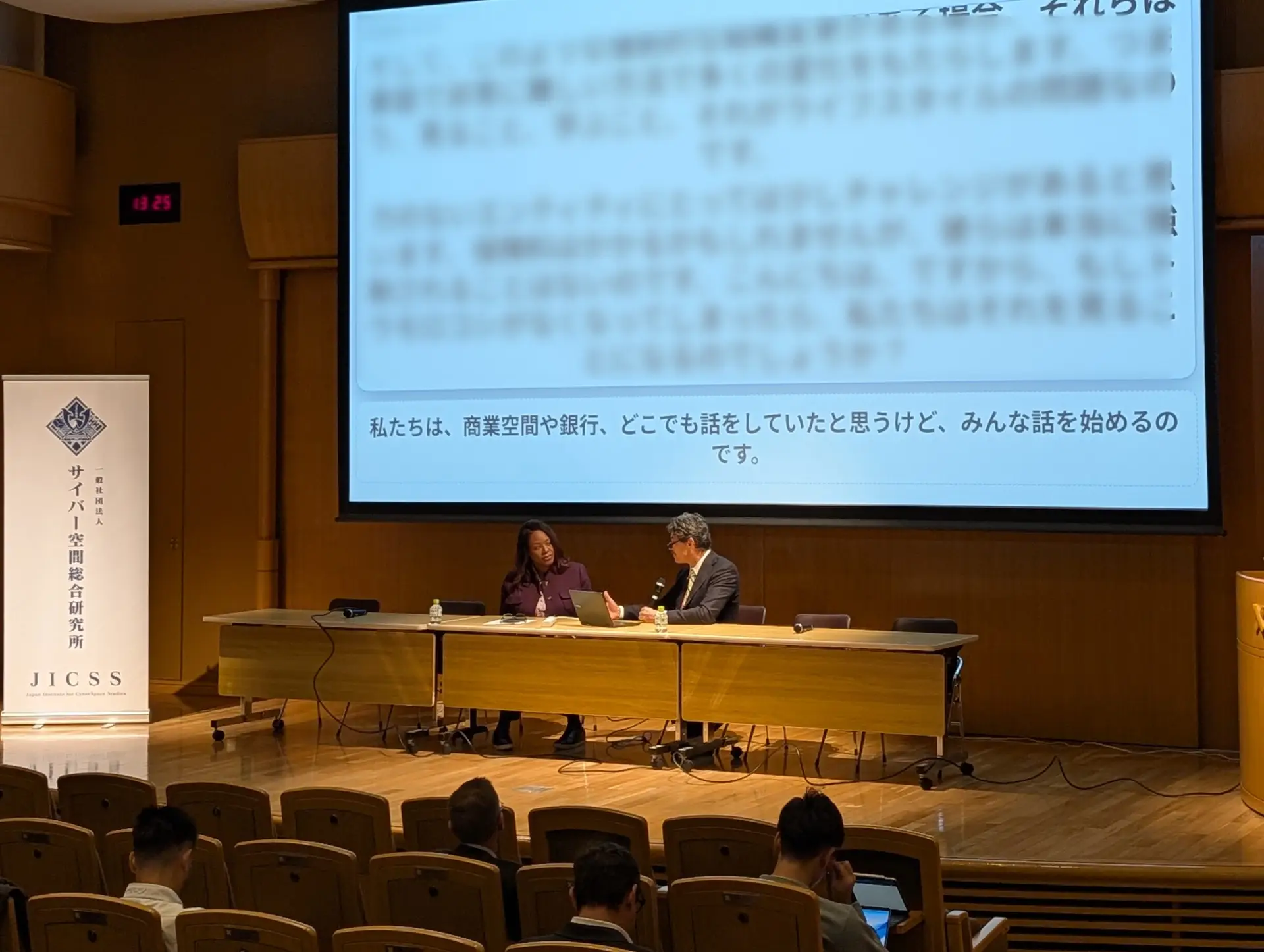
- Public Fireside Chat: “How Cybersecurity and Resilience Make Japan’s OT Sector Globally Competitive”
- Panel Discussion on Active Cyber Defense and Intelligence
- Panel Discussion: “Toward a More Secure Japan”
Closed Roundtable on OT Security
JICSS hosted an intimate roundtable discussion bringing together 17 leaders from US and Japanese government, private sector, and academia under Chatham House rules. The conversation examined increasing threats to Operational Technology and the resulting economic and national security challenges for Japan.
- Gloria Glaubman (JICSS Special Advisor and Founder, GMG Consulting) hosted the discussion, with James Miller (JICSS Director) moderating.Participants explored critical issues including:
- OT system vulnerabilities created by 20-30 year technology lifecycles
- Japan’s unique challenges in adopting system security engineering approaches for OT
- Financial sector reliance on legacy systems
- Supply chain complexity and the need for information sharing networks
- Human factors and social engineering as critical threat vectors
- Semiconductor traceability and supply chain certification
The roundtable identified concrete pathways forward, including encouraging memory-safe coding practices, implementing Software Bill of Materials (SBOMs) for legacy systems, and adopting international frameworks such as CMMC, NIST SP 800, and ISO standards.
Public Fireside Chat: OT Security and Japan’s Global Competitiveness
Gloria Glaubman and James Miller led an engaging public conversation exploring how Japan’s semiconductor and OT sectors can strengthen global competitiveness through cybersecurity excellence.
Before an audience of key stakeholders, the discussion examined:
International Collaboration: The continuing relevance of international pressure for cybersecurity transformation and the opportunities for US-Japan public-private partnerships
Resilience as Strategy: Making resilience a common goal with realistic, common-sense cybersecurity measures for managing assets with long lifecycles
Culture of Transparency: Building environments that encourage open disclosure and learning from incidents
Technical Evolution: Moving security focus from network layers to API spaces, emphasising data provenance and zero-trust environments
AI-Enabled Advancement: Leveraging artificial intelligence for accelerated log and alert analysis to achieve “leapfrog” development
Policy Alignment: Connecting cybersecurity transformation to the late Prime Minister Abe’s vision of “Digital Free-for-All with Trust”
The fireside chat followed JICSS’s recent policy guidance submission to the Ministry of Economy, Trade and Industry (METI) on OT Security Guidelines for Semiconductor Device Factories.
Panel Discussion: Active Cyber Defense and Intelligence
JICSS experts James Miller (JICSS Director) and Nate Snyder participated in panel discussions addressing Japan’s groundbreaking Cyber Response Capability Enhancement Act (2025), which represents a fundamental shift toward transparent, legally-codified active cyber defense. Unlike the US approach, Japan’s framework prioritises public law, independent oversight, and explicit privacy protections.
The panel explored critical themes including:
Defining Active Cyber Defense: Clarifying that ACD encompasses far more than “hacking back”—including information sharing, threat intelligence, honeypots, coordinated sanctions, and asset recovery operations
Urgent Implementation: Whilst Japan’s legislation phases in over two years, non-offensive ACD capabilities must be deployed immediately to operate at “machine speed” in cyberspace
Modern Oversight: Programme-level oversight with pre-approved playbooks rather than case-by-case approvals that cause operational delays, whilst maintaining strong privacy protections
Two-Way Information Sharing: Building trust through reciprocal exchanges where contributors receive tangible returns—analytic results, mitigation outcomes, and actionable guidance
US-Japan Cooperation: Opportunities for joint training, tabletop exercises, and harmonised frameworks to strengthen bilateral cyber defence capabilities
The panels explored US-Japan operational alignment, complementary regional and global capabilities, and the transformation of NISC into the National Cyber Office with enhanced operational coordination responsibilities.
Panellists emphasised that Japan’s hybrid legal approach—bridging US and EU frameworks—positions it to set new international standards for transparent, rights-respecting active cyber defense whilst maintaining operational effectiveness.
Panel Discussion: “Toward a More Secure Japan”
James Miller participated in this American Chamber of Commerce in Japan (ACCJ) discussion, providing strategic perspectives on Japan’s cybersecurity future.
Looking Ahead
JICSS’s symposium participation reinforces our commitment to advancing Japan’s cybersecurity ecosystem through thought leadership, policy guidance, and stakeholder convening. We are planning a robust 2026 event calendar to continue these critical dialogues with government, industry, and academic partners.
The discussions, particularly around Active Cyber Defense, information sharing architecture, and US-Japan operational cooperation, will inform JICSS’s ongoing policy guidance work and engagement with Japanese government ministries and international partners.
For more information about JICSS’s work in cybersecurity policy and operational technology security, please contact us through our website.
3. Acknowledgments
JICSS extends its sincere appreciation to Keio University’s Center for Cybersecurity Research and the MITRE Corporation for the kind invitation to participate in this landmark event. We also wish to thank our esteemed panelists—leading cybersecurity professionals from Japan and the international community—for their insightful contributions to the dialogue.
Link to the official report: